
How to Get Paid Faster as a Contractor in Canada
Most contractors finance their clients' jobs without knowing it. Materials bought upfront, labour paid weekly, invoice sent at the end, and then you wait. 30 days. 45 days. Sometimes 60. The next job is already underway and you're still waiting on payment for the last one. This is not a client problem. It is a process problem. And it has a practical fix.

The standard payment structure that actually works
A payment structure that protects cash flow on renovation and construction jobs looks like this:
- 30% deposit before materials are ordered. This is standard professional practice. It is not aggressive or unusual. Clients who push back on a deposit at this stage are a cash flow risk worth flagging.
- 30-40% mid-project payment at a defined milestone, typically rough-in completion or when the major structural work is done. Define this milestone in the quote, not verbally.
- Balance at completion, within 48 hours of sign-off. Not “when convenient.” Define the payment due date in writing before the job starts.
Why PDF invoices sent by email get paid slowly
The client receives a PDF. They open it on their phone. It requires them to copy your bank details, open their banking app, set up a transfer, and send it. Every step is friction. Friction means delay.
Then they forget. You follow up. They apologise. They pay two weeks later. This cycle is not client bad faith. It is a process design problem.
When a client can pay directly from a link in a message, payment happens the same day. Remove the friction and payment comes faster.
How to write an invoice that gets paid
- Include the payment due date on the invoice, not just “payment due on receipt.” A specific date is harder to ignore.
- Include a direct payment link or bank details prominently. Do not make the client search for how to pay.
- Reference the quote or job number. Clients with accounting departments (commercial clients) cannot process invoices that don’t reference the original purchase order or quote.
- Include your GST/HST number. This is a legal requirement for invoices over $30 in Canada. Missing it means some commercial clients cannot process the invoice until you resend.
The late payment escalation process
If a payment is more than 7 days late, a structured escalation prevents the relationship from getting awkward:
- Day 7: A short, professional message referencing the invoice number and due date. Not a chase, a reminder. Most late payments resolve here.
- Day 14: A phone call, not a message. Ask directly whether there is an issue with the invoice. Sometimes there is a genuine dispute or error that email does not surface.
- Day 21: A formal late payment notice referencing the agreed payment terms. In Canada, contractors have rights under provincial prompt payment legislation (Ontario’s Construction Act includes prompt payment provisions). Know your rights.
What changes when clients can pay online
The contractors who get paid fastest are the ones who make paying as easy as possible. When a client receives a link, clicks it, and pays in 60 seconds from their phone, they pay the same day. When they have to set up a bank transfer from a PDF, they pay when they get around to it.
Integrated online payments change the cash flow dynamic on every job. Deposits happen before work starts. Progress payments happen at milestones. Final payment happens at sign-off. The whole job runs on a defined schedule instead of a chase sequence.
Keep reading.
More templates and straight answers from people who ran the office.
 Guide
How to price a renovation job without losing money on it
A pricing framework for renovation and construction contractors - labour, materials, overhead, and margin. Know your floor before…
Read it
 Template
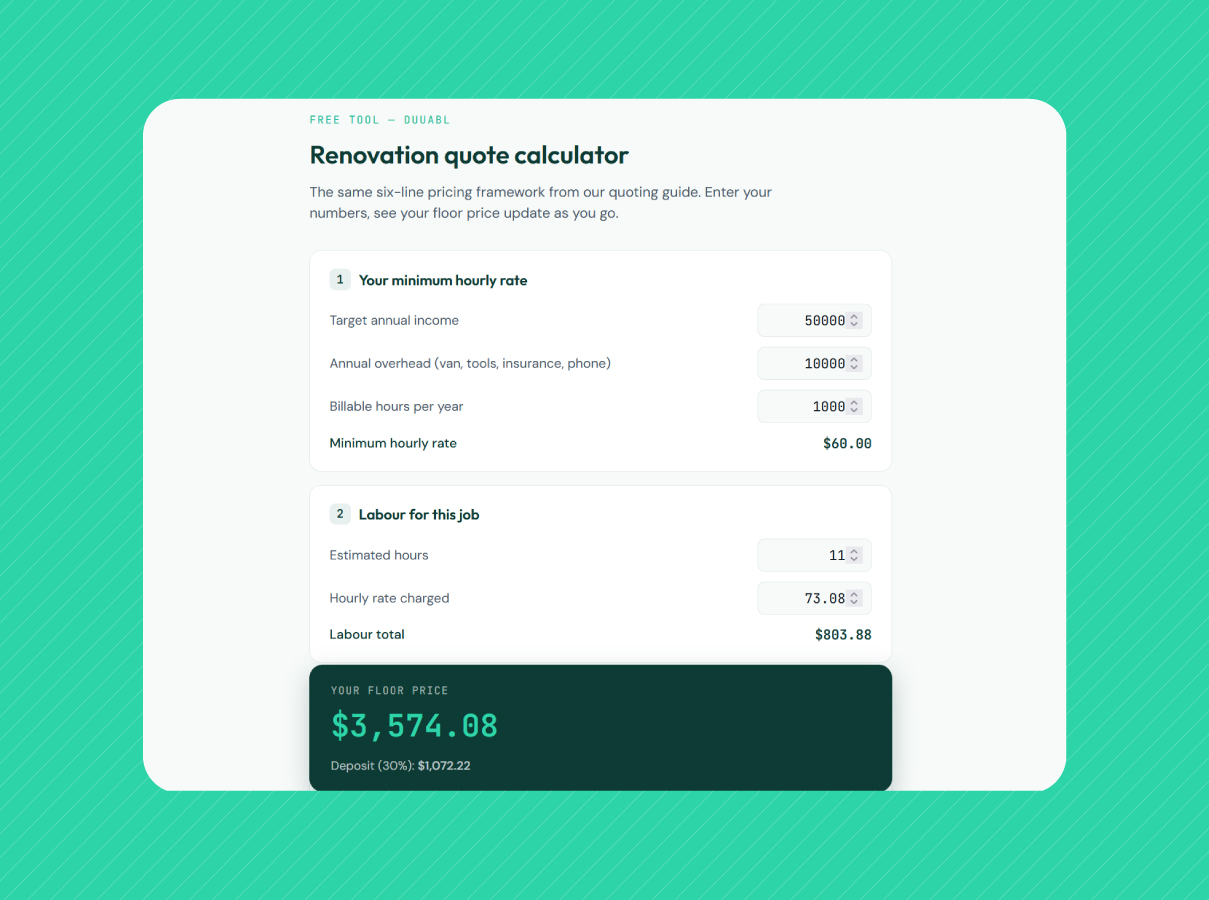
Renovation quote template
A free renovation and construction quote template, the same six-line pricing framework contractors use to know their floor…
Read it
 Industry Insights
The Data Problem in Construction Is Not at the Top. It Is at the Bottom.
Everyone points to enterprise construction when they talk about the data gap. The real gap is one layer…
Read it
 Industry Insights
The platforms tradespeople use to run their business (and what’s missing)
Most contractors use five or six disconnected tools to run one business. Here is what they are actually…
Read it
 Trade Guides
How to Run a Residential Electrical Job in Ontario: From Permit to Compliance Certificate
Residential electrical work in Ontario has more compliance stages than almost any other trade. A panel upgrade or…
Read it
 Business Tips
How to Price Construction Jobs Without Losing Money
Most contractors lose money on the jobs they should have made money on. Not because they did bad…
Read it